Travelers’ Diarrhea: Why Precision PCR Is Becoming Essential for Diagnosis?
Travelers’ Diarrhea(TD)is an acute diarrheal syndrome closely associated with international travel, most commonly caused by the consumption of contaminated food or water. As international tourism, business travel, and long-term overseas assignments continue to grow, the need for effective prevention and standardized clinical management is becoming increasingly important.
A newly published Chinese Expert Consensus on the Prevention and Management of Travelers’ Diarrhea (2026) provides clinicians with a practical, evidence-based framework covering the entire travel journey—from preparation before departure to prevention during travel and diagnosis after returning home.
Let’s take a closer look at the key highlights.

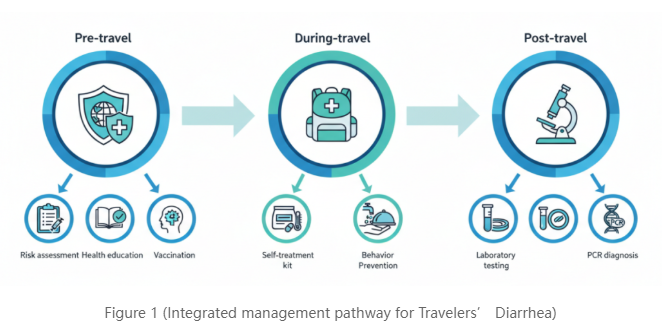
The Consensus organizes Travelers’ Diarrhea management into three stages:
Pre-Travel:Before departure, travelers should receive destination-specific health advice, including food and water safety, hand hygiene, self-treatment strategies, and appropriate vaccination. For selected high-risk travelers, bismuth subsalicylate or rifaximin may be considered for prevention.
During travel:During travel, behavioral prevention remains the first line of defense. Travelers should avoid raw or undercooked foods, untreated water, and food or drinks with uncertain hygiene. A self-treatment kit may help manage symptoms when medical care is unavailable.
Post-Travel:After travel, laboratory testing is recommended for diarrhea that is persistent (≥14 days), severe, bloody, or unresponsive to empirical treatment. In these cases, multiplex PCR plays an increasingly important role in accurate diagnosis.

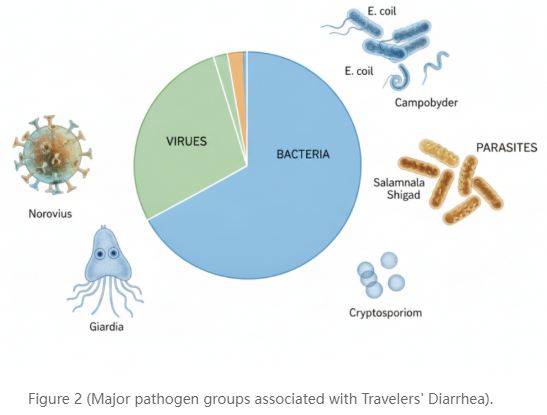
Bacteria remain the leading cause of Travelers’ Diarrhea, accounting for 75–90% of cases, while viruses and parasites contribute a smaller but clinically important proportion.Common bacterial pathogens include ETEC, EAEC, EPEC, Campylobacter, Shigella, and nontyphoidal Salmonella. Viruses such as norovirus and rotavirus account for 10–25% of infections, whereas parasites including Giardia, Cryptosporidium, and Entamoeba histolytica are more commonly associated with persistent diarrhea (>14 days).
Mixed infections are relatively common, and pathogen profiles vary by destination, season, and food exposure. Rising antimicrobial resistance—particularly among Campylobacter, Shigella, and nontyphoidal Salmonella—is making empirical therapy less reliable, reinforcing the need for rapid and accurate pathogen identification.

One of the most important updates in the new consensus is its recommendation for multiplex PCR testing.A large retrospective before-and-after study conducted in the United States involving 14,388 patients showed that the use of multiplex PCR testing (BioFire GI Panel) increased the pathogen detection rate from 4.1% with conventional culture/microscopy to 29.2%, representing more than a seven-fold improvement.
A prospective diagnostic study from Spain involving 185 stool samples further confirmed these findings: multiplex PCR detected 86 pathogens in 67 samples (36.2%), identifying 70 more pathogens than conventional testing.
Higher Detection,Faster Decisions
One of the strongest recommendations in the new consensus is the use of multiplex PCR for Travelers’ Diarrhea. Compared with conventional culture,multiplex PCR provides higher diagnostic yield,faster turnaround time,and earlier clinical intervention.
- Key findings include: Pathogen detection increased from 4.1% to 29.2%—more than a seven-fold improvement.
- Results are available in less than 5 hours, compared with 24–48 hours for conventional culture.
- Earlier pathogen identification enables faster targeted therapy, reducing median hospital stay from 7.5 days to 3 days.
Together, these findings demonstrate how rapid multiplex PCR supports faster clinical decision-making and more efficient patient management.
Supporting Better Antimicrobial Stewardship
The benefits of multiplex PCR extend well beyond faster diagnosis. Studies have shown that earlier and more accurate pathogen identification helps clinicians reduce unnecessary antibiotic use while improving treatment decisions.
Reported clinical benefits include:
- Lower antibiotic prescription rates
- More patients discharged without unnecessary antibiotic exposure
- Fewer invasive procedures, including endoscopy and imaging
- By identifying the true cause of infection earlier, clinicians can avoid empirical treatment and support responsible antimicrobial stewardship.
Detecting Mixed and Difficult-to-Diagnose Infections
Persistent diarrhea is often more complicated than acute infection. For patients with symptoms lasting longer than 14 days, the spectrum of possible pathogens expands to include parasites, viral infections, and bacteria requiring antimicrobial susceptibility testing.
Multiplex PCR is particularly valuable because it can detect multiple pathogens in a single sample mixed infections. Clinically actionable organisms that may be missed by conventional methods. This comprehensive detection capability provides physicians with clearer diagnostic information and supports more targeted treatment strategies.

The consensus highlights the importance of Shiga toxin-producing Escherichia coli (STEC), which can rapidly progress from watery diarrhea to bloody diarrhea and may lead to hemolytic uremic syndrome (HUS).
For patients with suspected STEC infection, the guideline recommends: Early molecular testing for stx1/stx2 toxin genes. Avoiding antibiotics and anti-motility agents until STEC has been excluded.
A prospective U.S. study (1,851 pediatric samples) also showed that culture should remain part of STEC diagnosis, as toxin testing alone cannot comprehensively detect all STEC serotypes.
This highlights the value of PCR-based toxin gene detection alongside conventional culture.

The consensus recommends combining multiplex PCR with conventional stool culture for returned travelers with persistent diarrhea (≥14 days), bloody diarrhea, or failure of empirical treatment.
Multiplex PCR enables rapid, broad pathogen detection, while culture provides isolate recovery and antimicrobial susceptibility testing. Together, they support more accurate, evidence-based patient management.
The consensus also notes that PCR panels differ in pathogen coverage and performance, and positive results should always be interpreted alongside clinical findings. Continued clinical validation and local standardization will be essential to optimize multiplex PCR implementation.
Article Reference:
National Center for Infectious Diseases, Evidence-Based Medicine Center of Fudan University. Chinese Expert Consensus on the Prevention and Management of Travelers’ Diarrhea: Full-Cycle Clinical Recommendations for Pre-Travel, During-Travel and Post-Travel Care[J]. Chinese Journal of Infectious Diseases, 2026, 44(3): 129-140. DOI: 10.3760/cma.j.cn311365-20251230-00463