
GBD 2023 in Nature Medicine: Cervical Cancer Burden & the Role of Molecular Diagnostics in Global Elimination
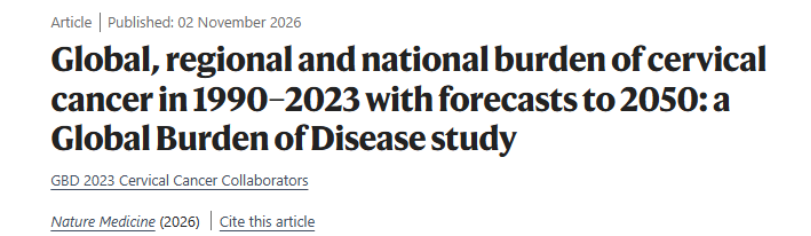
Cervical cancer is a highly preventable malignancy — yet it claims the lives of ~1000 women every day worldwide. The newly published GBD 2023 Cervical Cancer Study in Nature Medicine, quantifies this global burden across 204 countries and territories from 1990 to 2023, with forecasts through 2050.

- High 2023 burden:887k new cases, 369k deaths;
- Disparity:low vs high-income countries;
- Falling rates, rising toll:slight mortality dip, near-doubling of deaths.
- Persistent global burdenIn 2023, an estimated 887,000 new casesand 369,000 deaths of cervical cancer occurred globally, with 13.3 million disability-adjusted life-years (DALYs) lost.
- Stark global inequityAge-standardized incidence is >4× higherand mortality >7× higher in low-income countries than in high-income countries. The heaviest burden falls exactly where vaccination, screening and treatment access are weakest.
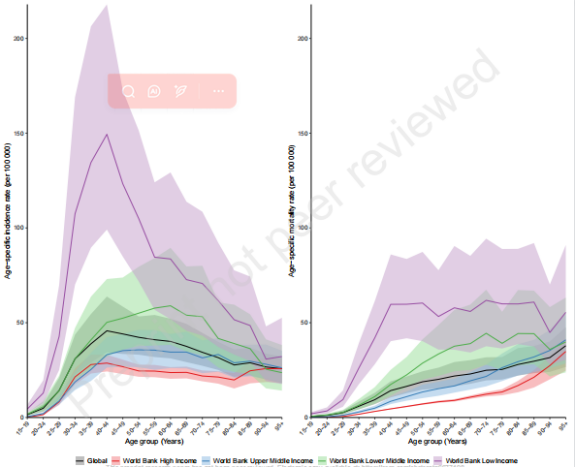
- Rising absolute burden aheadBy 2050, age-standardized rates will decline slightly (−12.5% for incidence, −9.0% for mortality vs. 2024). However, driven by population growth and aging, absolute cases will rise by 20.2% and deaths by 39.3%. Sub-Saharan Africa will see the steepest increase — deaths are projected to nearly double by 2050.
- Elimination targets are off trackUnder current trajectories, none of the 7 GBD super-regions will meet the WHO elimination threshold(<4 new cases per 100,000 women per year) by 2050
Almost all cervical cancer is caused by persistent high-risk HPV infection. While HPV vaccination is the cornerstone of primary prevention, HPV nucleic acid screening remains the most cost-effective secondary prevention tool — especially in low- and middle-income settings. Vaccines do not replace screening.

The global transition from cytology to HPV nucleic acid testing is accelerating across Southeast Asia, Latin America, MENA and Sub-Saharan Africa, creating sustained market growth backed by solid epidemiological demand.For diagnostic manufacturers, success in this space requires.
- Scalable, affordable, open-platform compatible assays for mass population screening;
- Full-genotyping solutions to support clinical triage and colposcopy referral;
- Compliance with IVDR / WHO PQ standards, paired with integrated instrument + reagent + training solutions for public health programs.

Sansure Biotech’s full HPV detection portfolio aligns with all tiers of global cervical cancer elimination strategies:
- Reliable performance:400 copies/mL sensitivity, with UNG anti-contamination and β-globin internal control for dual quality assurance
- Mass screening-ready: Open-platform, cost-effective high-risk HPV assays for large public health programs in resource-limited settings
- Clinical precision: Panels from 15 high-risk screening to 23/26 full genotyping for accurate risk stratification and colposcopy triage
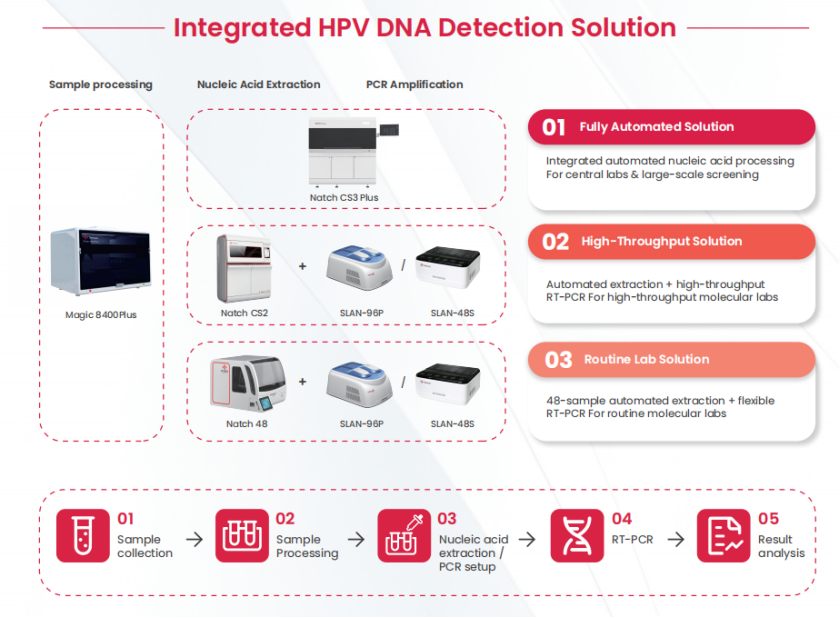
- Scenario-flexible:Available in conventional PCR, rapid POCT and automated workflows; CE/IVDR certified with turnkey instrument + training support.
Full product portfolio is detailed below:

Reference
GBD 2023 Cervical Cancer Collaborators. Global, regional and national burden of cervical cancer in 1990–2023 with forecasts to 2050: a Global Burden of Disease study. Nature Medicine. 2026. DOI: 10.1038/s41591-026-04729-4