
Rethinking Adult TBM: From Diagnosis to Treatment
Tuberculous meningitis (TBM) most often occurs secondary to pulmonary tuberculosis; a small proportion of cases result from hematogenous spread of lymph node or osteoarticular tuberculosis. It is the most critical subtype of tuberculosis, with an insidious onset, a high misdiagnosis rate, and extremely high risks of disability and mortality. High-risk groups include patients with active pulmonary tuberculosis, people with HIV infection, long-term users of corticosteroids or immunosuppressants, patients with malignancy or diabetes, older adults, and people with malnutrition, and organ transplant recipients. Adult TBM has an insidious onset and lacks specific early symptoms, making it highly susceptible to misdiagnosis as viral meningitis, purulent meningitis, or autoimmune encephalitis.
There are already numerous guidelines for pediatric TBM. However, adult TBM is more complex, with prominent diagnostic and treatment challenges involving comorbidities, drug-resistant tuberculosis, HIV coinfection, and elderly patients.
Conventional cerebrospinal fluid (CSF) biochemistry and cytology have limited specificity. Molecular tests such as Xpert Ultra and mNGS greatly improve early detection capacity. Evidence continues to accumulate on the use of newer drugs such as bedaquiline, delamanid, and linezolid in drug-resistant TBM. The latest Guidelines for the Diagnosis and Treatment of Adult Tuberculous Meningitis (2026 Edition) have now been officially released, standardizing adult TBM diagnosis, medication use, complication management, and management of special populations. They fill a gap in adult-specific diagnosis and treatment and provide authoritative evidence-based guidance for clinical practice.
Clinical Challenges
- Insidious onset and a lack of specific early symptoms make misdiagnosis highly likely.
- Delayed diagnosis: conventional CSF biochemistry/cytology have limited specificity.
- Inconsistent regimens: patients with drug resistance, high-risk features, or complications lack unified evidence-based guidance.
- High mortality: a single-specialty approach struggles to manage complex comorbidities.
Breakthrough Strategies for 2026
- Early warning: define high-risk profiles and multidimensional screening pathways.
- Prioritize molecular testing: Xpert Ultra and mNGS enter the core diagnostic sequence.
- Evidence-based newer drugs: standardize the introduction of newer drugs with good penetration, such as bedaquiline and linezolid.
- MDT collaboration: establish standards for joint multidisciplinary care involving infectious diseases, neurology, imaging, and other specialties.

Priority populations for screening: Patients with active pulmonary tuberculosis (the main primary source); immunosuppressed populations (people with HIV infection, long-term corticosteroid/immunosuppressant use, or organ transplantation); and vulnerable populations (older adults and people with diabetes, malignancy, or malnutrition).
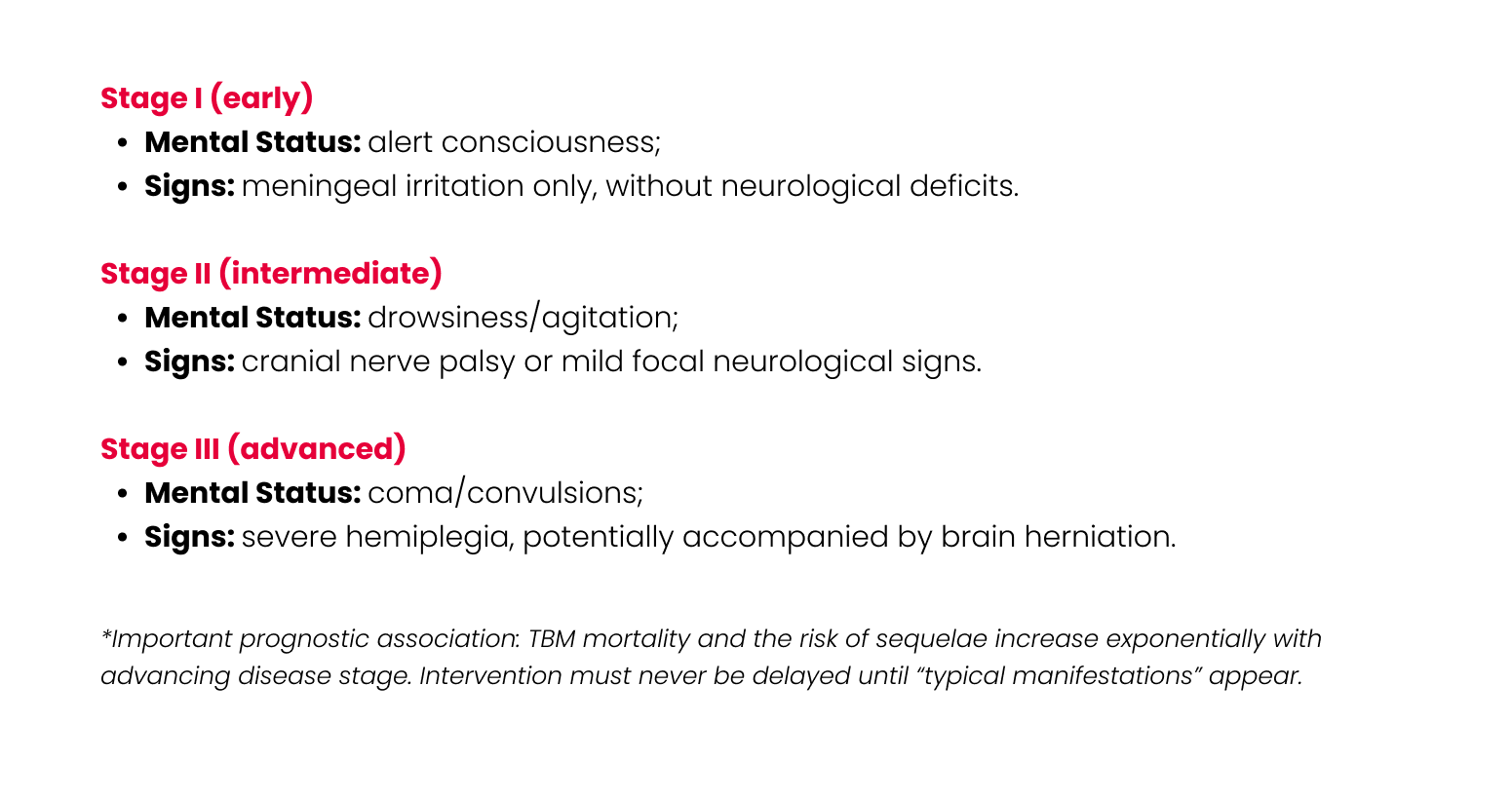
Evolution of clinical manifestations: Phase 1, systemic symptoms of tuberculosis (low-grade fever, night sweats, fatigue, and weight loss); Phase 2, meningeal irritation (severe headache, projectile vomiting, and neck stiffness); Phase 3, brain parenchymal and neurological injury (altered consciousness, seizures, limb hemiplegia, and cranial nerve injury such as visual impairment/diplopia/facial palsy).
1.1 Preferred Screening Combination
Perform lumbar puncture as early as possible in suspected cases. CSF Xpert Ultra is a core method for rapid confirmation; complete routine biochemistry, cytology, and mycobacterial culture concurrently.
Evolution of the Diagnostic Toolkit: Overcoming the Limitations of Conventional Testing
- Conventional biochemistry/cytology: elevated pressure, lymphocytic predominance, increased protein, and decreased glucose/chloride. Note: typical changes may be absent in early disease, severe disease, or patients with HIV; biochemical findings alone cannot exclude TBM.
- CSF smear: rapid, but sensitivity is extremely low (a negative result cannot exclude TBM).
- Mycobacterial culture: the gold standard. The turnaround time is extremely long (6–12 weeks), making it unable to guide early medication use.
- Xpert MTB/RIF Ultra: the preferred rapid molecular test. CSF specimens are prioritized, with simultaneous detection of mycobacteria and rifampicin resistance. Mandatory for suspected cases! [Preferred]
- mNGS (metagenomics): a supplementary method for pathogen-negative cases, highly suspected cases, or diagnostically challenging cases. Results must be interpreted in the clinical context and cannot serve as the sole basis for confirmation.
- Brain MRI: the preferred imaging modality. Typical findings: meningeal enhancement, basal cisternal exudates, and tuberculomas. (CT is used only for emergency assessment of hydrocephalus/hemorrhage.)
1.2 Imaging gold standard
Brain MRI is preferred for precise identification of meningeal enhancement, basal cisternal exudates, tuberculomas, and cerebrovascular lesions. CT is used only for rapid emergency assessment of hydrocephalus and cerebral hemorrhage.
1.3 Four-level diagnostic stratification
Confirmed, highly probable, probable, and excluded. Move beyond vague diagnoses and precisely match treatment regimens.Clinically suspected adult TBM (symptoms + high-risk factors):
- Confirmed: positive CSF culture OR positive Xpert Ultra, combined with clinical and imaging findings.
- Highly Probable: clinical symptoms + typical CSF biochemical changes + typical MRI findings. Key point: pathogen testing is negative, and other causes of meningitis have been excluded.
- Probable: high clinical suspicion, but insufficient test evidence. Action: immediately initiate a diagnostic trial of antituberculosis treatment and closely follow up.
- Excluded: another definite cause is identified (such as viral encephalitis, purulent meningitis, cryptococcosis, autoimmune encephalitis, or central nervous system tumors).

2.1 Drug-Susceptible TBM (Standard 12-Month Regimen)
- Intensive phase, 2 months: Isoniazid + rifampicin + pyrazinamide + ethambutol.
- Continuation phase, 10 months: Isoniazid + rifampicin.
- The treatment course may be extended as appropriate in patients with severe disease, concomitant tuberculomas, or immunocompromise.
- Dosing: calculate by body weight. A high-dose isoniazid regimen may be used as appropriate, with monitoring for peripheral neurotoxicity.
2.2 Drug-Resistant TBM (RR/MDR-TBM)
Abandon conventional regimens! Prioritize newer drugs with excellent CSF penetration, combine at least 3 effective drugs to which the organism is susceptible (such as bedaquiline and linezolid), and individualize a prolonged treatment course of 18–24 months.
2.3 Essentials for Safe Medication Use
Key monitoring: isoniazid-associated peripheral neuritis (preventive vitamin B6), liver injury, optic nerve injury (ethambutol), linezolid-associated bone marrow suppression, and bedaquiline-associated QT interval prolongation. Therapeutic drug monitoring (TDM) is recommended, particularly for patients with severe disease, drug resistance, or concomitant hepatic or renal dysfunction.

Strong recommendation: start adjunctive dexamethasone early in adults with stage I–III TBM without contraindications.
Effectively reduces meningeal inflammation and exudation and substantially lowers the risks of hydrocephalus, cerebral infarction, death, and neurological sequelae. Follow a gradual taper over 6–8 weeks. Abrupt discontinuation is strictly prohibited.
Active fungal infection and severe uncontrolled bacterial infection are contraindications to corticosteroid use.

Hydrocephalus: conservative treatment for mild cases. For persistent intracranial hypertension or risk of brain herniation, promptly obtain surgical assessment for drainage/shunt procedures.
Tuberculous vasculitis/cerebral infarction: antituberculosis treatment + corticosteroids form the core treatment; carefully assess antithrombotic therapy.
Symptomatic epilepsy: provide standardized symptomatic antiseizure treatment and individualize treatment duration.
HIV-associated IRIS: start ART 2–8 weeks after antituberculosis treatment begins. A short course of corticosteroids may be used for severe immune reconstitution inflammatory syndrome.

Avoiding the Pitfalls of Individualized Care
l Patients with HIV Coinfection
Strategy: initiate antiretroviral therapy (ART) as early as possible.
Timing: initiation is recommended 2–8 weeks after starting antituberculosis treatment.
Risks: remain highly vigilant for IRIS; rigorously assess interactions between antituberculosis drugs and ART.
l Older Adults
Strategy: reduce doses as appropriate and give high priority to managing underlying diseases.
Risks: adverse drug reactions occur very readily; closely monitor liver and kidney function parameters.
l Pregnancy
Strategy: prioritize antituberculosis regimens with high safety. Initiate MDT collaboration involving obstetrics, infectious diseases, and tuberculosis care.
Contraindication: aminoglycosides are absolutely contraindicated.
l Hepatic or Renal Impairment
Strategy: individualize and dynamically adjust doses and dosing intervals.
Action: strongly recommend introducing TDM (therapeutic drug monitoring) to support treatment safety.

Perform repeat lumbar punctures during treatment to assess efficacy, gradually reducing the frequency after the condition stabilizes. Follow up for at least 2 years after stopping treatment to monitor for relapse and delayed neurological sequelae.

Ten Core Recommendations from the 2026 Guidelines
- Perform lumbar puncture as early as possible; prioritize CSF Xpert Ultra testing and culture. [Strong recommendation]
- Use brain MRI as the preferred imaging modality; use emergency CT to assess cerebral hemorrhage/hydrocephalus. [Strong recommendation]
- Standard regimen for drug-susceptible TBM: 2 months of intensive treatment with HREZ + 10 months of continuation treatment with HR. [Strong recommendation]
- For stage I–III patients without contraindications, add dexamethasone early and taper gradually. [Strong recommendation]
- Drug-resistant TBM requires at least 3 newer drugs with high penetration (such as bedaquiline), with an individualized prolonged treatment course. [Strong recommendation]
- Vitamin B6 must be administered concurrently with isoniazid to prevent neuropathy; closely monitor liver and kidney function.[Strong recommendation]
- Prioritize medical treatment for hydrocephalus; early neurosurgical drainage is mandatory for risk of brain herniation/persistent intracranial hypertension. [Strong recommendation]
- For patients with HIV coinfection, start ART 2–8 weeks after starting antituberculosis treatment and closely monitor for IRIS. [Weak recommendation]
- CSF mNGS may be considered to assist diagnosis in difficult cases or cases with negative conventional pathogen testing. [Weak recommendation]
- Assess efficacy through repeat lumbar punctures (reduce frequency after stabilization); follow up for at least 2 years after stopping treatment. [Strong recommendation]
Adult tuberculous meningitis has an insidious onset and a poor prognosis. “Early recognition + prompt lumbar puncture + rapid molecular pathogen testing” is central to care. Standardize antituberculosis treatment combined with corticosteroids, actively manage complications such as hydrocephalus, vasculitis, and epilepsy, and use prolonged regimens incorporating newer drugs for drug-resistant TBM.
Multidisciplinary collaboration (tuberculosis care, infectious diseases, neurology, imaging, and laboratory medicine) helps reduce death and neurological sequelae. More real-world studies of adult TBM in China are needed to optimize dosing strategies, TDM thresholds, and approaches to complication management.